
No, teeth are not bones. Although both contain calcium and phosphate minerals that make them hard, they differ in structure, function, and ability to repair themselves. Teeth consist of four main tissues: enamel, dentin, cementum, and dental pulp. Bones are living tissues that continually remodel and can heal after many fractures, while tooth enamel cannot regenerate once it has been physically lost.
So, are teeth bones simply because they contain similar minerals? No. Their mineral content is only one part of the explanation. Teeth are specialized for biting and chewing, whereas bones support the body, protect internal organs, and help with movement. Their differences in tissue composition, blood supply, and healing explain why a damaged tooth cannot repair itself in the same way as a broken bone.
Why Aren’t Teeth Considered Bones?
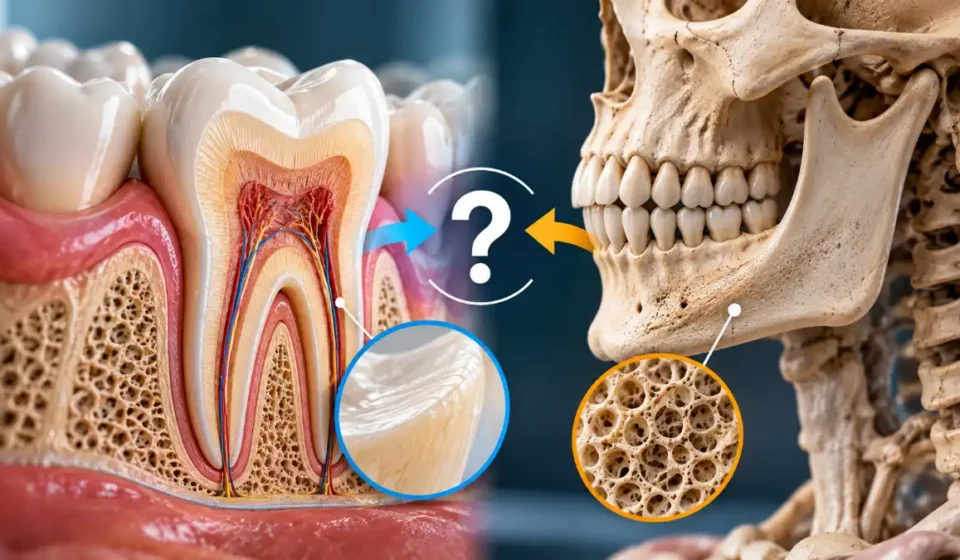
Teeth and bones share some chemical similarities, but their tissues are fundamentally different. Both contain hydroxyapatite, a calcium-phosphate mineral that contributes to their hardness. However, bone has a living, mineralized matrix containing collagen, cells, blood vessels, and nerves. Teeth contain several specialized tissues, each with a distinct role.
Bone tissue continually breaks down and rebuilds through a process called remodeling. This allows bones to adapt to physical demands and repair many types of damage. Teeth do not undergo the same whole-structure remodeling process. Their outer enamel is highly mineralized and contains no living cells, making it unable to regenerate naturally after substantial damage.
When people ask, “Are teeth bones or something different?” the key distinction is their biological structure. Teeth are specialized dental structures, not part of the body’s bone tissue. Although they sit in sockets within the jawbone, that physical connection does not make them bones.
What Are Teeth Made Of?
Each tooth contains four main tissues: enamel, dentin, cementum, and dental pulp. These tissues work together to protect the tooth, withstand chewing forces, and maintain its connection to surrounding structures.
Enamel
Enamel is the hard outer covering of the visible part of a tooth, called the crown. It is the hardest substance in the human body and contains a very high concentration of minerals, primarily hydroxyapatite. Its main function is to protect the more delicate tissues underneath from everyday chewing forces and wear.
Despite its hardness, enamel has an important limitation: it contains no living cells or blood vessels. Once enamel is physically worn away, chipped off, or lost through decay, the body cannot grow a replacement layer. Early mineral loss can sometimes be reversed through remineralization, but this process does not regrow missing enamel.
Dentin, Cementum, and Dental Pulp
Dentin forms most of the tooth’s structure. It lies beneath the enamel in the crown and surrounds the pulp. Although dentin is hard, it is less highly mineralized than enamel. Tiny channels within dentin help transmit sensations toward the inner tooth, which is one reason exposed dentin can cause sensitivity.
Cementum covers the tooth root and provides an attachment surface for the fibers that secure the tooth. The dental pulp occupies the soft inner chamber and contains blood vessels, nerves, and connective tissue. These components supply nutrients, support the tooth’s vitality, and contribute to its response to injury.
Together, these four tissues explain why a tooth is neither entirely living nor entirely nonliving. The pulp is living tissue, while enamel is acellular. Dentin and cementum have their own biological properties and limited capacities for repair. This specialized arrangement is another reason the answer to “are teeth bones?” is no.
Teeth vs. Bones: The Main Differences
The difference between teeth and bones becomes clearer when their composition, functions, blood supply, and healing abilities are compared.
| Feature | Teeth | Bones |
| Main structure | Enamel, dentin, cementum, and pulp | Mineralized living tissue with a collagen-rich matrix |
| Primary function | Biting, chewing, and supporting speech | Body support, organ protection, and movement |
| Outer structure | Enamel covers the crown | Compact bone forms much of the dense outer structure |
| Blood supply | Blood vessels are found in the pulp, not enamel | Blood vessels supply bone tissue |
| Remodeling | No continuous whole-tooth remodeling like bone | Continuously remodels throughout life |
| Healing | Enamel cannot regenerate; other dental tissues have limited repair capacity | Can heal after many fractures |
Blood Supply and Self-Repair
Blood supply is one of the most important biological differences. Bone contains blood vessels that deliver oxygen and nutrients to its living cells. These cells help maintain the tissue and participate in repair after an injury. Bone structure can change over time in response to growth, aging, and physical stress.
A tooth also has a blood supply, but it is concentrated in the dental pulp. Enamel has no blood vessels or living cells, so it cannot repair itself by producing new enamel. Dentin-producing cells can respond to certain forms of irritation by forming additional dentin, but this is not the same as restoring lost enamel or rebuilding an entire damaged tooth.
This distinction matters when comparing a chipped tooth with a broken bone. A bone fracture can often heal through a biological repair process. A chipped tooth cannot replace the missing enamel naturally, even though early mineral loss on an intact tooth surface may be reversible. Understanding this difference helps explain why teeth and bones require different approaches to damage.
How Are Teeth Connected to the Jawbone?
Teeth are held in their sockets by the periodontal ligament, a specialized connective tissue that attaches each tooth root to the surrounding alveolar bone. The ligament contains fibers that help secure the tooth while allowing slight movement during chewing. It also helps distribute the forces created when biting food.
The jawbone supports the tooth sockets, but the tooth and bone remain separate structures. The periodontal ligament connects them rather than turning the tooth into part of the bone tissue.
This arrangement is important because chewing places considerable pressure on teeth. The ligament helps distribute some of that pressure and contributes to sensory feedback that helps control biting force. Therefore, even though teeth are firmly attached to the jaw, they remain distinct from the bones that support them.
What Does This Difference Mean for Tooth Health?
The distinction between teeth and bones explains why tooth damage requires a different kind of care. Bone can repair many fractures through the activity of its living cells, but enamel cannot regenerate once part of its structure has been lost. Protecting enamel is important because the body cannot simply replace it.
Early enamel demineralization may improve when minerals return to the tooth surface. Fluoride and saliva can support remineralization, alongside appropriate oral hygiene. However, remineralization cannot rebuild a cavity that has already created a hole in the tooth.
Dentin and pulp injuries also differ from bone injuries because the tooth has a specialized internal structure with limited repair capacity. If a tooth is chipped, persistently painful, or visibly damaged, a dental professional can assess the extent of the injury and determine whether treatment is necessary.
Ultimately, teeth and bones share minerals but have different biological designs. Teeth are specialized dental structures, and their unique tissues explain both their hardness and their limited ability to repair damage.
Frequently Asked Questions
Are teeth considered bones?
No. Teeth are specialized structures made of enamel, dentin, cementum, and pulp. Although they share minerals with bones, their tissue composition and repair processes are different.
Why are teeth not bones if both contain calcium?
Calcium is a mineral found in many structures throughout the body. Teeth and bones also contain phosphate, but their tissues have different cellular structures, functions, and remodeling abilities.
What are teeth made of?
Teeth contain four main tissues: enamel, dentin, cementum, and dental pulp. Enamel protects the crown, dentin forms most of the tooth, cementum covers the root, and pulp contains nerves and blood vessels.
Is tooth enamel harder than bone?
Yes. Enamel is the hardest substance in the human body and is more highly mineralized than bone. However, its hardness does not mean it can repair itself when material is lost.
Can teeth heal themselves like bones?
Not in the same way. Bones can remodel and heal after many fractures, whereas enamel cannot regenerate. Some dental tissues can respond to injury, but their repair abilities are limited.
Do teeth have blood vessels?
Teeth have blood vessels in their dental pulp, which supplies nutrients to the living inner tissue. Enamel has no blood vessels, so it cannot receive a direct blood supply.
Why are teeth attached to the jawbone?
The periodontal ligament connects the tooth root to the alveolar bone surrounding its socket. This connection stabilizes the tooth and helps distribute pressure during chewing without making the tooth part of the bone.
Can damaged tooth enamel grow back?
No. Lost enamel cannot grow back naturally. Early mineral loss may be reversed through remineralization, but once enamel has physically worn away, or a cavity has formed, remineralization cannot restore the missing structure.