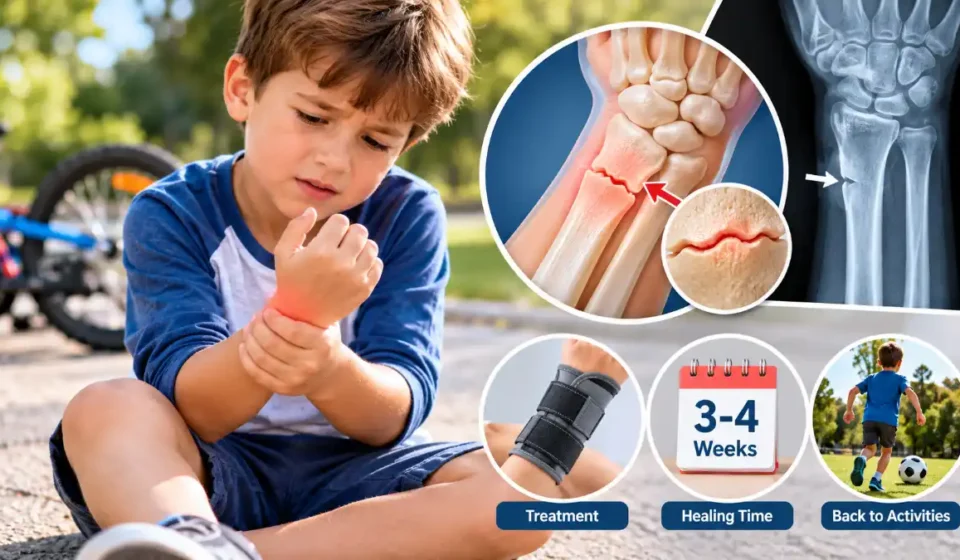

A buckle fracture is a stable, incomplete bone fracture that happens when compression causes the bone’s outer layer, called the cortex, to bulge or buckle without breaking all the way through. It most commonly affects children’s wrists and forearms because their growing bones are more flexible than adult bones. Also known as a torus fracture, this injury typically heals within 3–4 weeks and can usually be treated with a removable splint rather than a rigid cast or surgery.
Although this injury is generally less serious than a complete break, a medical examination is still important. Parents need to know what symptoms to watch for, how treatment works, and when their child can safely return to normal activities.
What Is a Buckle Fracture?
A buckle injury occurs when a bone is compressed with enough force that its outer layer wrinkles or bulges. Instead of breaking completely, the bone remains largely intact and in its normal position.
Children are more likely to experience this type of injury because their bones can bend more easily under pressure. Adult bones are generally less flexible and more likely to develop different fracture patterns when subjected to similar forces.
The injury most often involves the radius, the forearm bone on the thumb side of the wrist. In some cases, the ulna, the other forearm bone, is affected as well.
A buckle injury differs from a greenstick fracture, in which one side of the bone breaks while the opposite side bends. A complete fracture, by comparison, extends through the bone and may be less stable. These distinctions matter because different fracture patterns can require different treatments, as explained in this guide to forearm fractures in children.
Since the bone usually stays properly aligned, uncomplicated buckle injuries generally heal without lasting problems when correctly diagnosed and treated.
What Causes a Buckle Fracture in Children?
Falling onto an outstretched hand is the most common cause. When a child puts out a hand to break a fall, the impact travels through the wrist and into the forearm bones.
This can happen during everyday activities, including:
- Falling while running or playing.
- Losing balance while riding a bicycle or scooter.
- Landing awkwardly during playground activities.
- Falling during sports or physical education.
The sudden force compresses the bone near the wrist. Because children’s bones are relatively flexible, the outer layer may buckle instead of breaking completely.
Signs and Symptoms of a Buckle Fracture
Symptoms usually begin immediately after the injury, but they aren’t always severe. Some children have noticeable pain and avoid using their arm, while others can still move their wrist despite having a fracture.
Common symptoms include:
- Localized pain: Discomfort around the wrist or lower forearm, especially when moving the hand.
- Swelling: Mild swelling around the injured area.
- Tenderness: Pain when the affected part of the bone is touched or pressed.
- Reduced movement: Difficulty bending or turning the wrist comfortably.
- Reluctance to use the arm: Younger children may avoid picking up toys, holding objects, or using the injured hand.
The wrist may look normal because the bone hasn’t shifted out of place. Bruising is possible, although some children have no visible discoloration.
These symptoms can resemble a sprain, another fracture type, or a bone bruise. Since these injuries can cause similar pain and swelling, symptoms alone aren’t enough to determine exactly what happened.
How Is a Buckle Fracture Diagnosed?
Doctors usually confirm the injury through a physical examination and an X-ray.
The examination begins with questions about how the child was injured. The healthcare professional then checks the wrist or forearm for tenderness, swelling, limited movement, and signs of nerve or circulation problems.
An X-ray typically reveals a small bulge or irregularity along the bone’s outer layer, without a fracture line extending completely through it. This pattern helps distinguish a stable buckle injury from more complicated fractures.
Some injuries are difficult to identify on an X-ray, particularly when the changes are subtle. Doctors also need to rule out greenstick fractures, complete fractures, and injuries involving the growth plate.
If the X-ray findings are unclear or the symptoms suggest another injury, the child may need further assessment or follow-up. A confirmed diagnosis is important because it determines whether simple immobilization is appropriate.
Buckle Fracture Treatment: Splint or Cast?
Most uncomplicated buckle injuries heal without surgery. Because the bone remains stable and properly aligned, treatment mainly involves protecting the wrist, controlling pain, and allowing natural healing.
A removable wrist splint is commonly recommended for a confirmed, stable distal-radius injury. Some treatment plans use a soft bandage instead, particularly when the injury is straightforward and the child is comfortable.
Current pediatric buckle fracture treatment guidance supports removable wrist braces for uncomplicated injuries, with routine orthopedic follow-up often unnecessary.
Removable Splint vs. Rigid Cast
| Treatment | When it is used | Key consideration |
| Removable splint | Commonly recommended for stable buckle injuries | Supports the wrist and can be removed according to medical instructions |
| Soft bandage | Suitable for some uncomplicated injuries | Provides comfort with fewer movement restrictions |
| Rigid cast | Generally unnecessary for a confirmed, uncomplicated distal radius buckle injury | A different fracture pattern may require more restrictive immobilization after medical assessment |
Removable splints are often easier for children and parents to manage. Depending on the clinician’s instructions, they may be taken off for bathing or skin checks, making everyday care more convenient.
For discomfort, a healthcare professional may recommend an age-appropriate pain reliever such as acetaminophen or ibuprofen. Parents should follow the recommended dosage and consider the child’s age, medical history, and any conditions that could make a medication unsuitable.
Children with straightforward injuries often don’t need repeat X-rays or routine specialist appointments. However, follow-up may be necessary when the diagnosis is uncertain, pain continues, or recovery isn’t progressing as expected.
How Long Does a Buckle Fracture Take to Heal?
Most uncomplicated wrist buckle injuries heal within approximately 3–4 weeks, although the exact recovery period varies from child to child. The fact that the bone has healed doesn’t necessarily mean the wrist is ready for contact sports or other activities involving a risk of falling.
A removable splint is commonly worn for around three weeks, although some treatment protocols recommend four weeks. The child should follow the treating clinician’s instructions rather than stopping immobilization solely because the wrist feels better.
Recovery and Returning to Activities
Pain and swelling should begin improving during the first several days. Wearing the prescribed splint protects the wrist and helps make daily movement more comfortable.
After the splint is removed, the wrist may feel slightly stiff, weak, or tender. This is usually temporary, and comfortable movement gradually returns as the child starts using the hand normally.
Most children can return to ordinary activities as discomfort decreases and wrist movement improves. Activities with a greater chance of falling or direct impact, including climbing, rough play, and contact sports, require more caution.
Some pediatric fracture recovery guidelines recommend avoiding contact sports for six weeks after the injury. However, return to sport instructions can vary, so parents should follow the guidance provided for their child’s injury.
Mild stiffness after immobilization doesn’t automatically mean something is wrong. If pain, swelling, or limited movement continues instead of improving, a medical reassessment is appropriate.
When Should Parents Seek Medical Attention?
Any child with a suspected wrist or forearm fracture should be examined by a healthcare professional, even if the swelling is minor or the wrist looks normal.
Seek urgent medical attention if the child develops:
- Numbness or tingling in the fingers.
- Fingers that become pale, blue, or unusually cold.
- Severe or rapidly increasing pain or swelling.
- New difficulty moving the fingers.
These symptoms can indicate nerve involvement, circulation problems, or excessive pressure from a splint or cast. They should not be ignored or left until a routine follow-up appointment. Additional pediatric fracture warning signs include ongoing significant swelling and continued difficulty using the injured hand.
Parents should also arrange a reassessment if the wrist remains very painful or swollen around three weeks after the injury. If the child still refuses to use their hand, wrist, or fingers two to three days after splint removal, they should be examined again.
Frequently Asked Questions
Can a child go to school with a buckle fracture?
Yes. Most children can return to school once their pain is manageable and they can participate comfortably in normal classroom activities. They may need help carrying heavy bags or completing tasks that put pressure on the injured wrist. Physical education, contact sports, and playground activities involving a risk of falling should be restricted according to medical advice.
Will the bone be permanently weaker after a buckle fracture?
Usually not. An uncomplicated buckle injury generally heals without permanent bone weakness or lasting loss of function. Some children experience temporary wrist stiffness or reduced strength after wearing a splint, but these symptoms typically improve as normal movement returns. Persistent pain or difficulty using the wrist should be assessed by a healthcare professional.