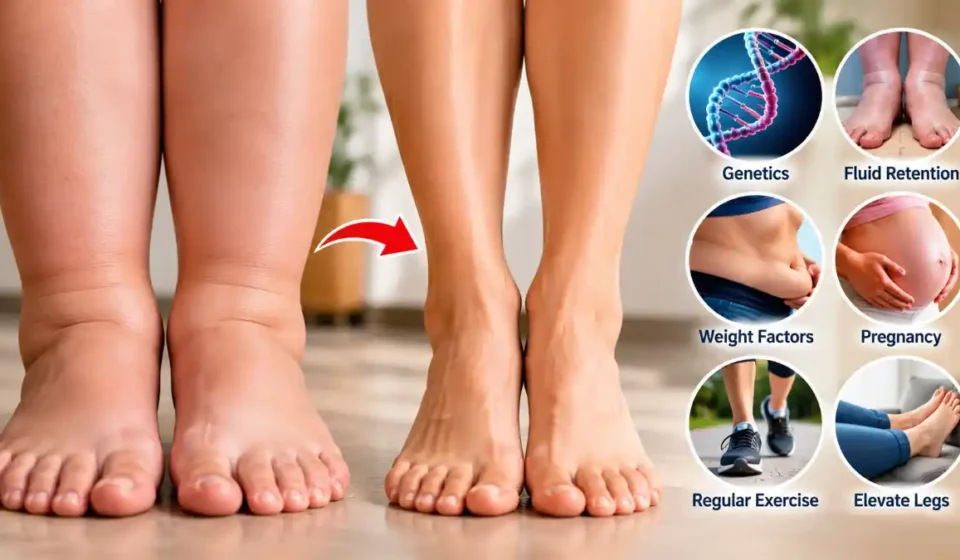

Cankles is an informal term combining “calves” and “ankles.” It describes legs where the calves and ankles blend without much visible narrowing between them. Some people naturally have fuller ankles because of genetics, body structure, or fat distribution. For others, the appearance develops because of fluid retention or an underlying medical condition.
Cankles aren’t a medical diagnosis, and having naturally thicker ankles doesn’t necessarily mean there’s a health problem. Whether you can reduce their appearance depends on the cause. Exercise and weight management may help in some cases, while swelling may improve with lifestyle changes or treatment of an underlying condition.
What Are Cankles?
Cankles describe a lower-leg shape with little visible definition between the calf and ankle. Instead of tapering noticeably toward the ankle joint, the lower leg maintains a relatively similar width.
For many people, this is simply how their legs are shaped. Bone structure, muscle development, and the amount of fat beneath the skin all influence how defined the ankles appear.
However, cankles and swollen ankles aren’t necessarily the same thing. Swelling, medically known as edema, occurs when excess fluid collects in body tissues. This can make previously defined ankles look fuller, sometimes temporarily.
| Feature | Naturally Fuller Ankles | Swollen Ankles (Edema) |
| Main cause | Body structure or fat distribution | Excess fluid in tissues |
| Appearance | Usually relatively consistent | May change throughout the day |
| Development | Often longstanding | Can develop gradually or suddenly |
| Symptoms | Usually no discomfort | May cause tightness, heaviness, or discomfort |
| Treatment | Often unnecessary | Depends on the underlying cause |
These differences can offer clues, but appearance alone isn’t enough to identify the cause. Some forms of edema are chronic, so swelling may remain relatively consistent rather than appearing suddenly.
What Causes Cankles?
Several factors can affect how your ankles look. Some involve natural body proportions, while others cause fluid to accumulate in the lower legs.
Genetics, Body Structure, and Fat Distribution
Genetics plays a role in body proportions, including the natural shape of your calves and ankles. Some people inherit wider ankle structures or have less noticeable narrowing between their lower legs and feet.
The way your body stores fat can also affect ankle definition. If more fat accumulates around the lower legs, the transition between the calf and ankle may appear less distinct, even when no swelling is present.
Excess body weight can contribute to fuller ankles through increased fat accumulation and, in some cases, a greater tendency toward swelling. However, ankles aren’t limited to people who are overweight. Someone can be lean and still have naturally thicker ankles.
Fluid Retention and Medical Conditions
Fluid retention is another possible cause, especially if your ankles have recently become fuller or their appearance changes throughout the day.
According to medical guidance on foot, leg, and ankle swelling, fluid buildup can occur for several reasons, from everyday habits to conditions that affect circulation or organ function.
Common causes and contributing conditions include:
- Prolonged sitting or standing: Staying in one position for hours can allow fluid to collect in the lower legs, particularly around the ankles.
- Pregnancy: Hormonal changes and increased pressure on blood vessels can cause ankle swelling, especially later in pregnancy.
- High sodium intake: Eating too much sodium may contribute to fluid retention in susceptible individuals.
- Medications: Certain blood pressure medications, steroids, hormone treatments, and nonsteroidal anti-inflammatory drugs (NSAIDs) can cause swelling.
- Venous insufficiency: When leg veins don’t move blood back toward the heart efficiently, fluid can accumulate in the lower legs and cause persistent swelling.
- Lymphedema: Problems with lymphatic drainage can lead to long-term swelling, sometimes involving the ankles and feet.
- Lipedema: This chronic condition causes disproportionate fat accumulation, typically in both legs. It may also cause tenderness and easy bruising. Unlike many forms of edema, lipedema often leaves the feet relatively unaffected.
The distinction between ordinary fat distribution and lipedema matters because lipedema is a medical condition that may require specialist care.
Heart, kidney, and liver disorders can also cause swelling in the lower legs. These conditions need medical evaluation rather than treatments aimed solely at changing ankle appearance.
Still, fuller ankles don’t automatically indicate fluid retention or disease. A clinician may consider your medical history, symptoms, and changes in appearance to determine whether further testing is needed.
How to Get Rid of Cankles
The best way to manage cankles depends on whether their appearance comes from natural anatomy, body fat, or swelling. No single exercise, diet, or treatment works for every cause.
Exercises and Regular Movement
Regular physical activity supports circulation and strengthens the muscles in your lower legs. It’s particularly useful when mild swelling develops after long periods of sitting or standing.
A few simple movements may help:
- Walking: Activates your calf muscles, helping move blood from the lower legs back toward the heart.
- Calf raises: Strengthen the calves and activate the calf-muscle pump. Hold onto a stable surface, slowly raise your heels, and lower them with control.
- Ankle pumps: While seated, point your toes away from you and then flex them toward your body to encourage circulation.
- Movement breaks: Stand, stretch, or walk regularly instead of remaining seated for hours.
These exercises can improve muscle strength and may ease swelling associated with inactivity. However, they won’t selectively remove fat from your ankles. Spot reduction isn’t a reliable way to lose fat from a specific body area.
If one leg becomes suddenly swollen or painful without an obvious explanation, avoid strenuous exercise until a healthcare professional has evaluated the symptoms.
Weight Management and Lifestyle Changes
When excess body fat contributes to fuller ankles, gradual overall weight loss may make the lower legs look more defined. The results vary, though, because genetics and natural body proportions still influence ankle shape.
If mild swelling is the main concern, a few everyday changes may be helpful:
- Elevate your legs while resting, ideally above heart level when comfortable and medically appropriate.
- Avoid sitting or standing in one position for extended periods.
- Stay physically active with regular walking or other comfortable movement.
- Reduce excessive sodium intake if it contributes to fluid retention.
- Choose comfortable shoes that don’t put additional pressure on swollen feet or ankles.
These measures are consistent with commonly recommended self-care strategies for swollen ankles and feet.
They may reduce temporary fluid buildup, but they won’t necessarily change the shape of naturally wider ankles.
Compression and Medical Treatments
Compression socks or stockings can help control certain types of lower-leg swelling by applying gentle pressure that supports blood flow and limits fluid accumulation.
However, compression isn’t suitable for everyone, particularly people with certain circulation problems. A healthcare professional can help determine whether it’s appropriate and recommend the correct compression level.
Treatment for persistent swelling depends on what’s causing it. Venous insufficiency may be managed with compression or procedures that improve blood flow through affected veins. Lymphedema treatment may involve professionally guided compression, exercise, and techniques that help move lymph fluid.
If medication is contributing to swelling, your healthcare provider may consider changing the dose or prescribing an alternative. Don’t stop taking prescribed medication without medical advice.
Diuretics, sometimes called water pills, are useful for certain causes of edema but aren’t appropriate for every type of swelling. They shouldn’t be taken simply to make ankles look slimmer.
When Should You See a Doctor About Ankles?
If your ankles have always been naturally fuller and you have no discomfort or other symptoms, there’s usually no reason for concern.
However, new, unexplained, persistent, or worsening ankle swelling should be evaluated, especially if you notice pain, skin changes, or other unusual symptoms.
Seek prompt medical attention if you experience:
- Sudden swelling, especially when it affects only one leg.
- Pain, warmth, redness, or tenderness around the swollen area.
- Swelling that continues, becomes worse, or appears without a clear explanation.
- Skin discoloration, wounds, or significant tightness in the lower legs.
Sudden swelling in one leg can sometimes indicate deep vein thrombosis (DVT), a blood clot in a deep vein. The CDC’s guidance on blood clot symptoms identifies swelling, pain, warmth, and skin discoloration as possible warning signs.
Call 911 immediately in the United States if you experience chest pain, sudden difficulty breathing, fainting, or coughing up blood, with or without leg swelling. These symptoms may indicate a pulmonary embolism or another medical emergency.
During pregnancy, contact your maternity healthcare professional immediately if you notice sudden, marked swelling of your face, hands, or feet. A severe or persistent headache, vision changes, or other concerning symptoms also need immediate assessment, even without noticeable swelling. These can be warning signs of preeclampsia, a serious pregnancy complication.
Can Cankles Go Away?
Cankles can become less noticeable, but whether they disappear depends on their underlying cause.
If your ankles look fuller because of temporary fluid retention, the swelling may improve with regular movement, leg elevation, or treatment of the condition causing it. Losing excess body fat may also change the appearance of your lower legs, although there’s no guarantee your ankles will become noticeably narrower.
When the shape comes primarily from inherited bone structure or natural body proportions, exercise and lifestyle changes may have little effect on ankle definition.
What matters most is whether your ankles have always looked this way or have recently changed. Naturally fuller ankles generally don’t need treatment, while persistent or unexplained swelling deserves medical attention.
Read also: Cankles
Frequently Asked Questions
Can socks leave marks on your ankles without a medical problem?
Yes. Socks with tight elastic bands can leave temporary marks on the skin, even when you don’t have a medical condition. However, deep indentations accompanied by noticeable swelling, especially if they persist or worsen, may indicate fluid retention and should be discussed with a healthcare professional.
Does pressing a swollen ankle leave a dent?
Sometimes. Certain types of edema cause pitting, meaning a temporary indentation remains after you press gently on the swollen area. Other forms of swelling don’t leave a dent. This sign alone cannot identify the cause, and swelling without pitting may still require medical evaluation.