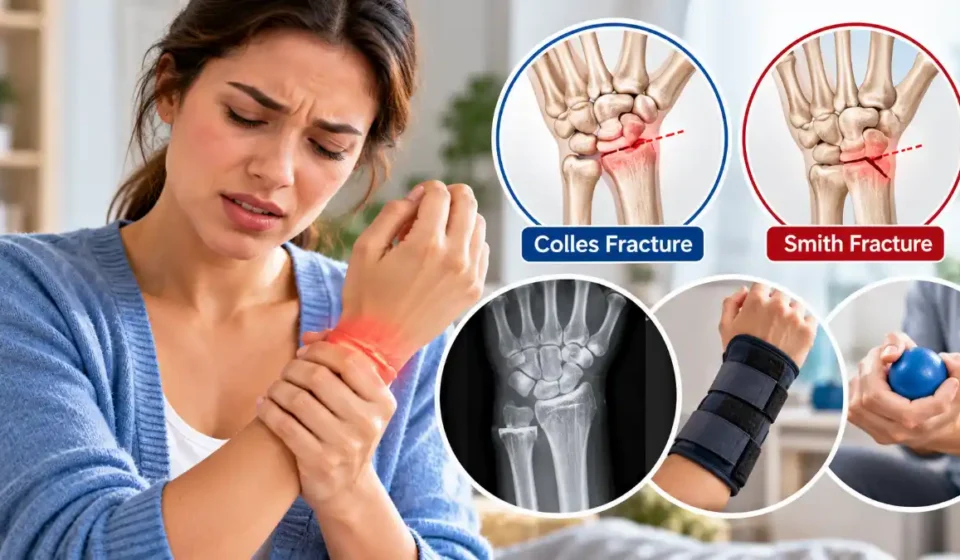

A Colles fracture is a type of broken wrist that affects the distal radius, the end of the forearm bone on the thumb side. In this injury, the broken fragment near the wrist angles backward toward the back of the hand, sometimes creating a distinctive dinner-fork deformity. It most often happens when someone falls onto an outstretched hand. Depending on the fracture’s severity and alignment, treatment may involve a splint, cast, or surgery.
Common symptoms include wrist pain, swelling, bruising, and difficulty moving the hand. Although the bone typically heals over several weeks, regaining normal wrist strength and movement can take months. If you suspect a wrist fracture, seek prompt medical attention, even if the wrist looks normal.
What Is a Colles Fracture?
A Colles fracture occurs near the wrist end of the radius, one of the two forearm bones. Its defining feature is dorsal angulation, meaning the broken fragment closest to the wrist tilts toward the back of the hand.
When the fracture is significantly displaced, the wrist may develop a curved appearance resembling the profile of a dinner fork. However, this visible deformity is not present in every case. A clinical explanation of Colles fractures also describes how the injury affects wrist alignment and movement.
Colles Fracture vs. Smith Fracture
Both injuries affect the distal radius, but the broken bone angles in opposite directions.
- Colles fracture: The distal fragment angles backward, toward the back of the hand.
- Smith fracture: The distal fragment angles forward, toward the palm.
Not every distal radius fracture is a Colles fracture. For example, a buckle fracture is another type of distal radius injury, usually seen in children, in which the bone compresses and buckles rather than breaking with the characteristic Colles alignment.
Colles Fracture Symptoms
Colles fracture symptoms generally begin immediately after the injury. How severe they feel depends on the fracture’s displacement and whether nearby tissues are damaged.
Common signs include:
- Wrist pain: Often sharp or intense, especially when trying to move the wrist.
- Swelling: The wrist may swell quickly after the injury.
- Bruising: Discoloration can develop or become more noticeable over time.
- Tenderness: Touching the injured area may cause significant discomfort.
- Limited movement: Bending, rotating, or using the wrist can become difficult.
- Visible deformity: Some fractures cause an unusual bend or dinner-fork appearance.
- Numbness or tingling: These symptoms may indicate irritation or compression of a nearby nerve.
A broken wrist can sometimes look and feel like a severe sprain. Because symptoms alone cannot reliably distinguish the two, an X-ray is usually necessary.
What Causes a Colles Fracture?
The most common cause of a Colles fracture is falling onto an outstretched hand. When someone reaches forward to break a fall, the impact travels through the wrist and places considerable force on the distal radius.
Other possible causes include falls during sports, cycling or skiing accidents, and motor vehicle collisions.
Several factors can increase the risk:
- Older age: Age-related changes in bone strength make fractures more likely after falls.
- Osteoporosis: Weakened bones can break under forces that might not fracture healthy bone.
- High-impact activities: Contact sports and activities involving falls or collisions increase exposure to wrist injuries.
Older adults with osteoporosis may fracture their wrist after a relatively minor fall. Younger people are more likely to sustain this injury during a high-energy accident.
Because a wrist fracture can sometimes be an early sign of reduced bone strength, a doctor may recommend further evaluation for osteoporosis. The National Institutes of Health explains how osteoporosis increases fracture risk, particularly in older adults.
How Is a Colles Fracture Diagnosed?
Diagnosis starts with a physical examination and questions about how the injury happened.
A healthcare professional checks the wrist for swelling, tenderness, deformity, and restricted movement. They also assess finger sensation, movement, and circulation to look for possible nerve or blood vessel problems.
Wrist X-rays are the main diagnostic test. As explained in orthopedic guidance on distal radius fractures, imaging helps doctors assess the broken bone and plan appropriate treatment.
X-rays can reveal:
- The exact location of the fracture.
- Whether the bone fragments have shifted or tilted.
- Whether the break extends into the wrist joint.
- How well the fragments remain aligned.
A CT scan may be recommended for more complex injuries, particularly when doctors need a clearer view of the joint surface.
Colles Fracture Treatment Options
Colles fracture treatment aims to restore acceptable bone alignment, keep the fracture stable while it heals, and preserve wrist function.
The appropriate approach depends on how far the fragments have moved, whether the fracture is stable, whether the joint is involved, and the patient’s age, health, and functional needs.
Nonsurgical Treatment
Many Colles fractures can heal without surgery, especially when the bone fragments are already in an acceptable position or can be successfully realigned.
Nonsurgical care may involve:
- Splinting: Keeping the wrist still, particularly during the early period of swelling.
- Casting: Holding the fractured bone in position while healing takes place.
- Closed reduction: A clinician carefully realigns displaced fragments without making a surgical incision.
- Follow-up X-rays: Checking whether the fracture remains properly aligned as it heals.
Patients should follow their clinician’s instructions about immobilization and activity restrictions. Never attempt to straighten or reposition a broken wrist yourself, as doing so can worsen the injury.
When Is Surgery Necessary?
Surgery may be necessary when a fracture is unstable, severely displaced, cannot be maintained in an acceptable position, or significantly damages the wrist joint.
Depending on the injury, an orthopedic surgeon may use plates, screws, pins, or an external fixation device to hold the fragments in place.
Not every Colles fracture requires surgery. The decision depends on the fracture’s characteristics and the likely benefits and risks of each treatment option for the individual patient.
Colles Fracture Healing Time and Recovery
Colles fracture healing time varies according to the injury’s severity, treatment method, bone health, and individual healing response.
Some minor, stable fractures require a splint for approximately 3–5 weeks. Other injuries may need a cast for around 6–8 weeks. Even after the initial healing period, the wrist may remain stiff or weak.
| Recovery stage | Typical timeframe | What to expect |
| Immobilization | About 3–8 weeks, depending on treatment | A splint or cast protects the healing fracture |
| Early functional recovery | Often 3–4 months or longer | Wrist movement and everyday function gradually improve |
| Longer-term recovery | Several months to a year | Strength, flexibility, and comfort may continue improving |
These timelines are estimates, not guarantees. Recovery is often gradual, and some people experience lingering stiffness or discomfort.
The Colles wrist fracture aftercare guidance provides additional information about healing, cast care, activity restrictions, and rehabilitation.
Rehabilitation and Returning to Normal Activities
Healing the bone is only part of recovery. After several weeks in a splint or cast, the wrist and surrounding muscles may feel stiff, weak, or uncomfortable.
Depending on the injury and treatment, your healthcare professional may recommend:
- Elevating the hand to reduce swelling.
- Applying a cold pack wrapped in a towel, without getting the cast wet.
- Keeping the cast or splint dry and following care instructions.
- Moving the fingers, elbow, and shoulder when permitted.
- Starting gentle wrist exercises once the fracture is sufficiently stable.
- Physical or occupational therapy if additional rehabilitation is needed.
Most people return to light daily activities gradually, based on comfort and medical guidance. Heavier lifting, sports, and physically demanding work generally require more healing time.
A cast coming off does not mean the wrist is ready for unrestricted activity. Returning too quickly can cause pain or interfere with recovery.
Possible Complications and When to Seek Urgent Care
Many Colles fractures heal well with appropriate treatment, but complications can occur, particularly after severe or unstable injuries.
Possible complications include:
- Malunion: The fracture heals with the bone in an abnormal position.
- Persistent stiffness: Wrist movement remains restricted after healing.
- Nerve compression: Pressure on the median nerve can cause numbness, tingling, or weakness.
- Complex regional pain syndrome: Persistent pain that is disproportionate to the original injury, sometimes accompanied by swelling or unusual skin sensitivity.
- Post-traumatic arthritis: Damage to the wrist joint may contribute to arthritis later, especially when the fracture involves the joint surface.
Seek emergency medical care if there is an open fracture, severe deformity, rapidly worsening pain, or fingers that become pale, blue, or unusually cold. New numbness, significant tingling, or an inability to move the fingers also needs immediate assessment because these symptoms may indicate nerve or circulation problems.
Even without obvious warning signs, a suspected wrist fracture requires prompt medical evaluation. General broken wrist emergency guidance explains why worsening pain, swelling, numbness, and changes in finger color should never be ignored.
If you already have a cast, contact your healthcare provider immediately if it becomes excessively tight, pain or swelling increases, or sensation in your fingers changes.
Timely diagnosis, proper stabilization, and follow-up care can reduce the risk of poor alignment and lasting problems with wrist function.
Frequently Asked Questions
What should you do immediately after a suspected Colles fracture?
Stop using the injured wrist and keep it as still as possible. Remove rings or a watch before swelling increases, provided they come off easily. Support the arm and apply a cold pack wrapped in a towel for short periods. Do not try to straighten the wrist. Seek prompt medical evaluation, and get emergency care if the fingers become numb, cold, discolored, or difficult to move.
Can you drive with a Colles fracture?
Driving may be unsafe while your wrist is immobilized, painful, or you are unable to control the steering wheel properly. Pain medications that cause drowsiness can also affect driving. Ask your treating clinician when driving is appropriate, and check any applicable local driving and insurance requirements. Do not resume driving until you can safely control the vehicle.