Tag: sixth sense ending explained

  • The Sixth Sense: Plot, Cast, Twist Ending & Meaning Explained

    The Sixth Sense: Plot, Cast, Twist Ending & Meaning Explained

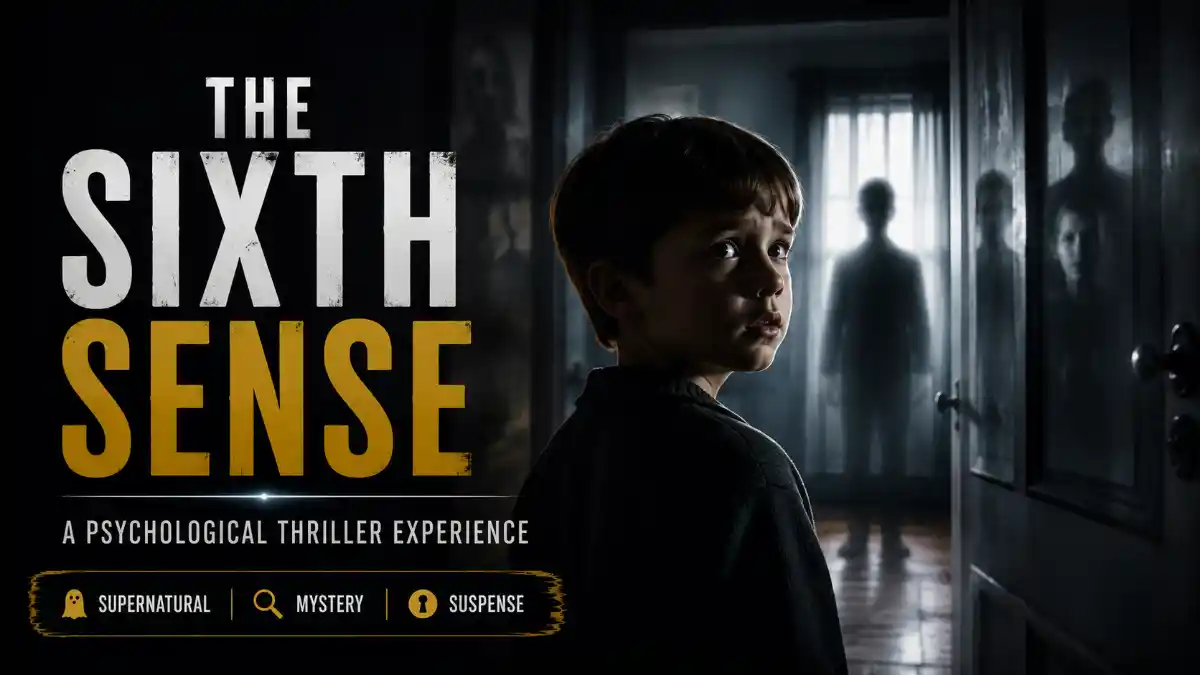
    The Sixth Sense is a 1999 psychological thriller written and directed by M. Night Shyamalan, starring Bruce Willis as child psychologist Dr. Malcolm Crowe and Haley Joel Osment as Cole Sear, a nine-year-old boy who says he can see and speak to the dead. As Malcolm tries to help Cole understand his ability, the film builds toward a twist ending that recontextualizes everything that came before it.

    Released on August 6, 1999, the film grossed $672.8 million worldwide against a $40 million budget, making it the second-highest-grossing film of that year. It received six Academy Award nominations, including Best Picture, and remains one of the most discussed twist-ending films in modern cinema.

    This guide covers the plot of The Sixth Sense, its twist ending, the clues that support it, the cast and characters, its themes, and its production and reception. Spoilers for the ending are marked clearly before the reveal.

    Quick Facts

    DetailInformation
    Release dateAugust 6, 1999
    DirectorM. Night Shyamalan
    GenrePsychological/supernatural thriller
    Lead castBruce Willis, Haley Joel Osment, Toni Collette
    SettingPhiladelphia
    Runtime1 hr 47 min
    Budget$40 million
    Worldwide box office$672.8 million

    Read More: The Sixth Sense

    What Is The Sixth Sense About?

    The Sixth Sense follows child psychologist Malcolm Crowe as he treats Cole Sear, a withdrawn boy who is secretly terrified because he sees and communicates with the dead. Malcolm, still shaken after a former patient blamed him for failing to help him, sees Cole’s case as a chance for redemption. As Malcolm earns Cole’s trust, the boy begins to open up about his ability and about ghosts who appear to him with unfinished business.

    The story is set in Philadelphia and unfolds as a psychological drama rather than a conventional horror film, building tension through atmosphere and character rather than shock effects. This restraint sets up the twist covered later in this guide, and it is part of why the film continues to be studied as a benchmark for the modern psychological thriller.

    Plot Summary

    How the Story Begins

    Malcolm Crowe, a child psychologist, is celebrating a career honor with his wife Anna when a former patient, Vincent Grey, breaks into their home. Vincent accuses Malcolm of failing to help him years earlier, and the confrontation turns violent. This opening scene, though brief, sets the entire narrative in motion and is essential to understanding the twist that follows much later in the film.

    Malcolm Takes On Cole’s Case

    The following autumn, Malcolm begins treating Cole Sear, a boy who reminds him of Vincent. Cole is isolated at school, hides unexplained marks on his body, and is visibly frightened of something he won’t name. His mother, Lynn, is increasingly worried and unsure how to help him, and her scenes throughout the film quietly track a parent trying to reach a child who won’t explain what’s wrong.

    Cole’s Secret

    Cole eventually tells Malcolm that he sees dead people who don’t know they’re dead. Malcolm initially suspects a psychological disorder, but a discovery involving an old therapy recording convinces him Cole is telling the truth. He advises Cole to listen to what the ghosts want instead of fearing them, a shift in approach that becomes the emotional turning point of the film’s middle act.

    The Kyra Collins Case

    Cole encounters the ghost of Kyra Collins, a girl who died after a long illness. Following her guidance, he retrieves a videotape that reveals her mother had been poisoning her, evidence that protects Kyra’s younger sister from the same fate. This subplot shows that Cole’s ability, however frightening, can also help people, and it functions as proof within the story that his gift has genuine purpose rather than being purely a curse.

    Cole Opens Up to His Mother

    Gaining confidence, Cole lands the lead role in his school play. He then tells Lynn his secret, proving it by describing details about her own childhood that he could only know if a deceased relative had shared them with him. Lynn’s disbelief turns to acceptance, repairing their relationship and giving Cole, for the first time in the film, an ally who fully understands what he’s dealing with.

    The Twist Ending Explained

    Spoiler warning: this section reveals the film’s ending.

    The twist is that Malcolm Crowe has been dead since the film’s opening scene. Vincent’s gunshot killed him, and Malcolm spends the rest of the story as a ghost, unaware of his own death, believing he is simply continuing his work and his marriage.

    Before parting ways, Cole suggests Malcolm try speaking to Anna while she sleeps, so she might hear him on some level. Malcolm returns home to find Anna watching their wedding video before falling asleep. She murmurs, asking why he left her. When she drops his wedding ring, Malcolm notices it isn’t on his own hand. Recalling Cole’s earlier comment that the dead often see only what they want to see, Malcolm checks his side and finds the gunshot wound from Vincent’s attack.

    He realizes he never survived that night. Malcolm tells the sleeping Anna that she was never “second” to anything in his life and that he loves her. Her expression relaxes, which the film presents as a sign that she can begin to let go, and Malcolm’s spirit departs in a flash of light.

    What the Ending Actually Means

    Beyond the literal reveal, the ending resolves the film’s emotional core. Malcolm’s guilt over failing Vincent and his inability to reach Anna as their marriage grew distant are both addressed through his work with Cole. Helping Cole accept his ability appears to allow Malcolm to accept his own death, and his final words to Anna give her a form of closure. The ending recontextualizes the preceding story as one about unresolved grief and connection rather than a conventional ghost story.

    This is also why the film rewards a second viewing more than most thrillers with a major twist. Once the audience knows Malcolm is dead, scenes that initially read as ordinary drama, such as his strained interactions with Anna or his patience with Cole, take on a different emotional weight. The film isn’t simply hiding information; it’s asking the audience to reinterpret a relationship they thought they already understood.

    Clues Malcolm Was Dead All Along

    Shyamalan structured the film around misdirection that becomes visible on a second viewing. Key clues include:

    ClueWhat HappensWhy Viewers Miss It
    Restaurant sceneAnna does not respond to Malcolm and appears distant toward himReads as marital tension rather than an inability to hear him
    Wedding ringMalcolm is not wearing it in the final sceneAn easy visual detail to overlook on first viewing
    Cole’s abilityCole speaks to Malcolm directly and naturallyMakes Malcolm appear to be simply another adult in the room
    Other adultsNo other adult character directly engages Malcolm in conversationThe absence is easy to miss without a second viewing
    Malcolm’s wardrobeHe wears the same coat, sweater, and suit layers throughoutCan be mistaken for ordinary continuity rather than a clue
    Color redAppears at several moments connected to the supernatural elements of the storyUsed sparingly enough to avoid conscious notice on a first viewing

    Read More: The Sixth Sense

    The recurring use of red in scenes involving Cole’s encounters with the dead, such as the church door and the tent where he meets Kyra’s ghost, has been widely discussed by film critics as a visual motif linking specific objects and settings to the supernatural elements of the story. Taken together, these clues form a coherent second narrative running underneath the surface plot, which is part of why the film is frequently cited as a model for how to plant a twist fairly.

    Cast and Characters

    CharacterActorRole in the Story
    Dr. Malcolm CroweBruce WillisChild psychologist who dies at the film’s opening and spends the story unaware he is a ghost
    Cole SearHaley Joel OsmentNine-year-old boy who can see and communicate with the dead
    Lynn SearToni ColletteCole’s single mother, worried about his behavior and secrets
    Anna CroweOlivia WilliamsMalcolm’s grieving wife, whom he struggles to reach after his death
    Vincent GreyDonnie WahlbergFormer patient of Malcolm’s whose confrontation leads to Malcolm’s death
    Kyra CollinsMischa BartonDeceased child ghost whose case exposes her mother’s poisoning
    Dr. HillM. Night ShyamalanBrief cameo role as another psychologist

    Haley Joel Osment received an Academy Award nomination for Best Supporting Actor for his performance, and Toni Collette received an Academy Award nomination for Best Supporting Actress. Osment’s line “I see dead people” is ranked No. 44 on AFI’s list of the 100 greatest movie quotes. Both performances are frequently cited as central to the film’s emotional credibility, since the twist only works if the audience fully believes in the relationships on screen beforehand.

    Themes and Symbolism

    Unfinished Business and the Afterlife

    The film portrays its ghosts as bound to the living world by unresolved grief, guilt, or trauma. Vincent, Kyra, and Malcolm are each held back by something left unsaid or undone, and Cole’s ability becomes the means through which several of them find resolution.

    Guilt and Redemption

    Malcolm’s arc is driven by guilt over failing Vincent. His commitment to Cole’s case, despite the disturbing parallel, can be read as a search for redemption that he achieves only after death, without consciously recognizing it until the final scene.

    Isolation and Being Believed

    Cole’s arc reflects the experience of being disbelieved and isolated for something outside his control. His relief once Malcolm and then Lynn believe him speaks to a theme that extends beyond the film’s supernatural premise, and it’s a large part of why the film resonates with viewers who have never experienced anything supernatural themselves.

    Production Background

    Disney acquired M. Night Shyamalan’s spec script for The Sixth Sense in a deal that also secured his position as director, after then-president of production David Vogel championed the project without full corporate approval. Reported figures for the deal vary by source, ranging from approximately $2.25 million to $3 million. Vogel’s unauthorized purchase is widely reported in entertainment trade coverage to have contributed to his departure from Disney shortly afterward.

    Bruce Willis joined the project after an earlier film he was attached to, Broadway Brawler, was shelved. The movie was filmed largely in Philadelphia, with cinematography by Tak Fujimoto and editing by Andrew Mondshein, both of whom received award recognition for their work on the film, including an Academy Award nomination for Mondshein’s editing.

    Reception, Awards and Legacy

    As of this writing, the film holds an 86% critics score on Rotten Tomatoes. It received six Academy Award nominations, including Best Picture, Best Director, Best Original Screenplay, and Best Film Editing, and four BAFTA nominations, including Best Film, but won none of these. It did win the Nebula Award for Best Script, an award given by the Science Fiction and Fantasy Writers Association.

    The film’s commercial performance and twist ending are widely credited in film criticism with shaping M. Night Shyamalan’s subsequent career as a director closely associated with the genre, and it remains a frequent reference point in discussions of how to structure a mystery around a concealed narrator.

    Frequently Asked Questions

    Is The Sixth Sense based on a true story?

    No. The Sixth Sense is an original screenplay written by M. Night Shyamalan. It is not based on real events, though it explores themes of grief and unresolved trauma that give the story emotional grounding beyond its supernatural premise.

    Did Anna know Malcolm was dead?

    The film leaves this ambiguous. Anna never consciously acknowledges Malcolm’s presence, but her sleep-talking suggests she may sense him on some level, and her calm expression after he speaks to her can be interpreted as a form of closure, even if she never learns the literal truth.

    What does the color red symbolize in the film?

    Red appears at several moments connected to Cole’s encounters with the dead. Film critics have widely discussed this as a visual motif linking specific scenes to the supernatural elements of the story, though there is no single definitive statement from the filmmakers explaining every use of the color.

    Did The Sixth Sense win any Academy Awards?

    No. Despite six nominations, including Best Picture and Best Director, the film did not win any Oscars. It did win the Nebula Award for Best Script and received strong recognition across critics’ groups during its awards season run.

    Is The Sixth Sense a horror movie?

    It is generally classified as a psychological thriller with supernatural elements rather than a conventional horror film. Its tension comes primarily from atmosphere and character drama rather than graphic violence or jump scares, which sets it apart from many ghost-themed films released around the same time.

    What does the title “The Sixth Sense” refer to?

    The title refers to Cole’s ability to see and communicate with the dead, beyond the five ordinary human senses, a gift the film portrays as both a burden and a source of purpose once he learns to use it to help others.

    How did Malcolm Crowe die?

    Malcolm was shot by Vincent Grey, a former patient who broke into his home and blamed him for failing to treat him years earlier. The wound proves fatal, though Malcolm does not realize this until the film’s final scene.

    Why can only Cole see Malcolm?

    Because Malcolm is a ghost, and Cole’s ability allows him to perceive and communicate with the dead. Other characters in the film cannot see or interact with Malcolm because they lack this ability, which is why he never directly engages with anyone else after the shooting.

    Is there a sequel to The Sixth Sense?

    No official sequel was produced. The film functions as a self-contained story, and its ending is generally regarded as complete rather than open to continuation.

    What age rating does The Sixth Sense have?

    The film was rated PG-13 for its thematic material and some disturbing content. Parents considering the film for younger viewers should be aware of its tense atmosphere and scenes involving violence and grief.