
Intercostal Muscle Strain: Symptoms, Treatment, and Recovery Time

An intercostal muscle strain happens when one or more muscles between the ribs are overstretched or torn. It usually causes sharp or aching pain along the rib cage, especially when taking a deep breath, coughing, twisting, or moving the upper body. Heavy…

Iliopsoas Muscle: Anatomy, Function, Pain, and Exercises
The iliopsoas muscle is a deep hip-flexor complex made up primarily of two muscles: the psoas major and iliacus. It extends from the lumbar spine and inner pelvis across the front of the hip, attaching mainly to the lesser trochanter of the femur (thigh…
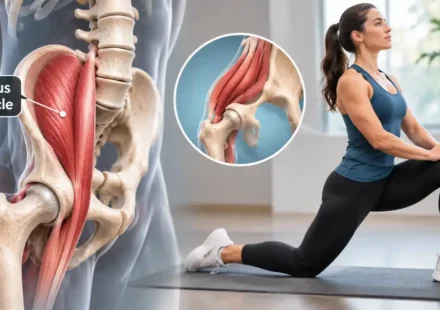
Iliacus Muscle: Anatomy, Function, Pain, and Stretches
The iliacus muscle is a broad, fan-shaped skeletal muscle located inside the pelvis, covering the iliac fossa on the inner surface of the hip bone. It works with the psoas major to form the iliopsoas, a powerful hip-flexor muscle complex that helps lift…
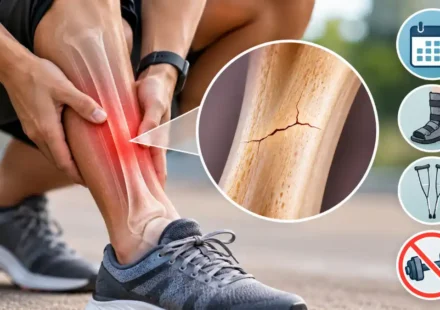
Hairline Fracture: Symptoms, Causes, Treatment, and Healing Time
A hairline fracture is a small, thin crack in a bone caused by repetitive stress or an injury, such as a fall or direct impact. Despite its small size, it’s still a broken bone. Common symptoms include localized pain, tenderness, and swelling,…
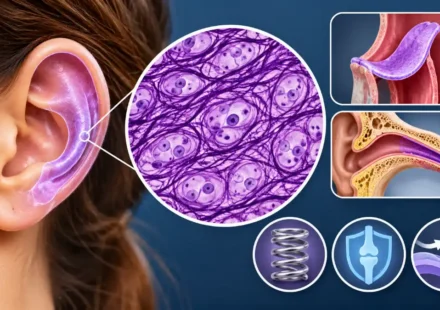
Elastic Cartilage: Structure, Locations, Functions, and Histology
Elastic cartilage is the most flexible of the three main types of cartilage. It provides structural support while allowing tissues to bend and return to their original shape. This specialized connective tissue contains chondrocytes (cartilage cells)…

Degloving Injury: Types, Symptoms, Treatment, and Recovery
A degloving injury is a serious traumatic injury that occurs when the skin and underlying soft tissue are separated from deeper structures, such as the fascia covering muscles. This separation can damage blood vessels and lymphatic channels, reducing…
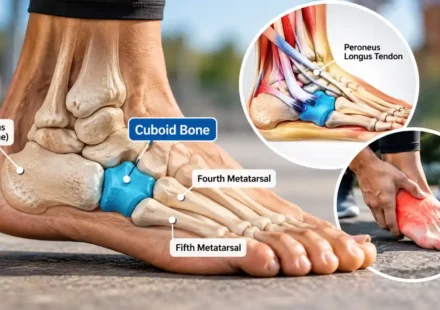
Cuboid Bone: Location, Anatomy, Function, and Common Injuries
The cuboid bone is a small, roughly cube-shaped tarsal bone on the outer (lateral) side of the midfoot. It sits between the calcaneus (heel bone) and the fourth and fifth metatarsals. This bone helps stabilize the foot, support its arches, and guide the…

Compound Fracture: Symptoms, Emergency Treatment, and Recovery
A compound fracture, also called an open fracture, happens when a broken bone is connected to the outside environment through an open wound. The bone may stick out through the skin, but it doesn’t have to be visible. Even a small puncture wound…

Colles Fracture: Symptoms, Causes, Treatment, and Recovery
A Colles fracture is a type of broken wrist that affects the distal radius, the end of the forearm bone on the thumb side. In this injury, the broken fragment near the wrist angles backward toward the back of the hand, sometimes creating a distinctive…

Cartilage Piercing: Types, Pain, Healing Time, Aftercare & Cost
A cartilage piercing goes through the ear’s firm cartilage rather than the soft tissue of the earlobe. Popular placements include the helix, tragus, conch, daith, and rook. Most cartilage piercings take around 6–12 months to heal, sometimes longer.…